Chikara Intelligence vs Dealroom
Dealroom maps start-up ecosystems for investors, public bodies and growth teams. Chikara Intelligence tracks who moved, what the compensation was and where the assets sit. Both cover funding. They are built for different jobs.
Why teams choose Chikara Intelligence
Built for executive search and leadership intelligence, not repurposed from sales or market research.
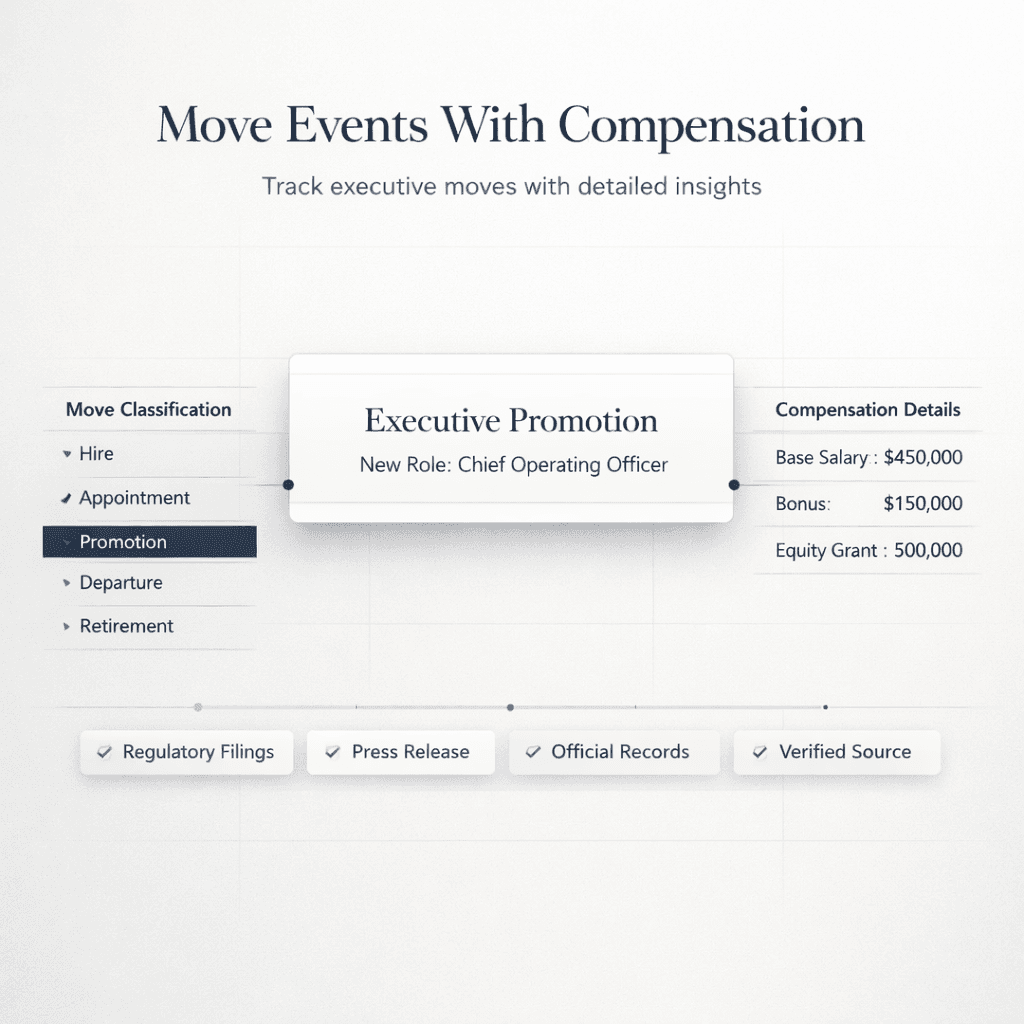
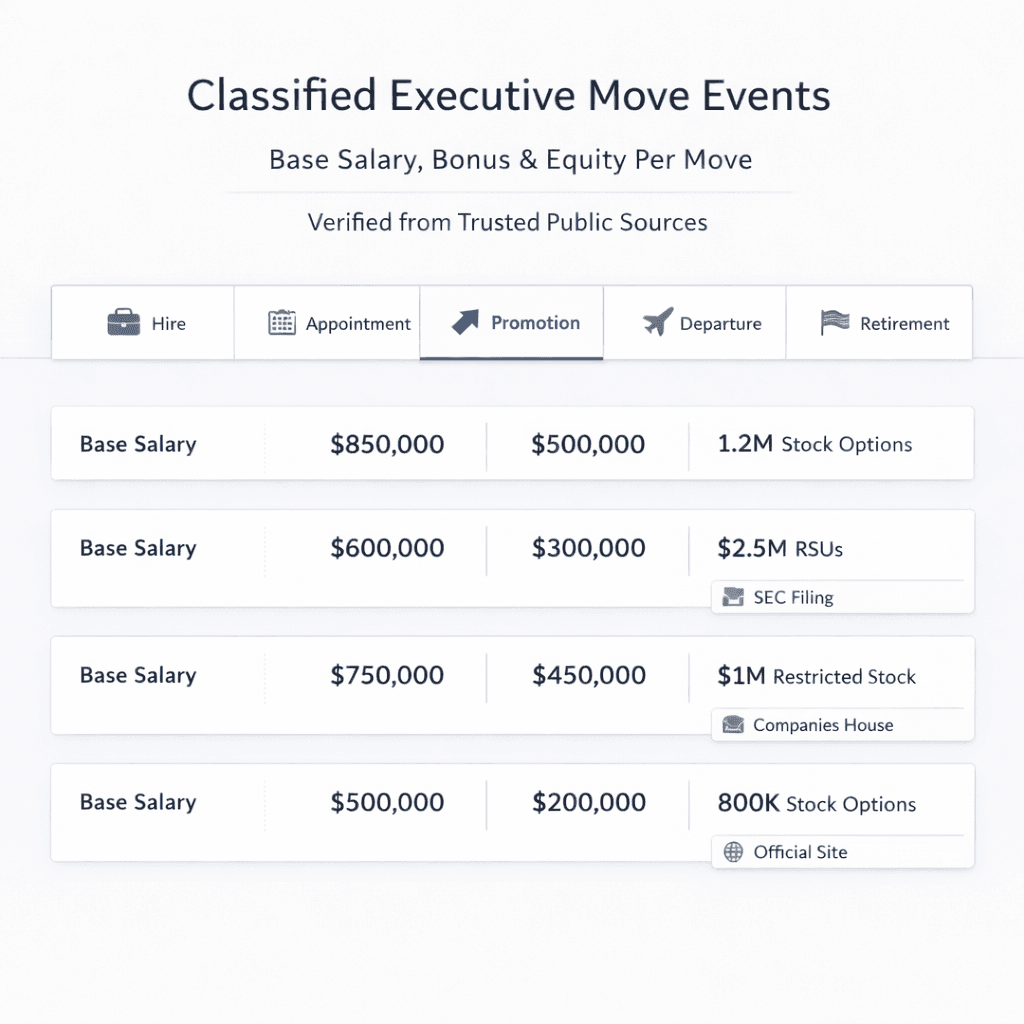
- Move types split into hire, appointment, promotion, departure and retirement, with compensation attached to each event
- Compensation data from filings, Companies House, press releases and official organisation sites
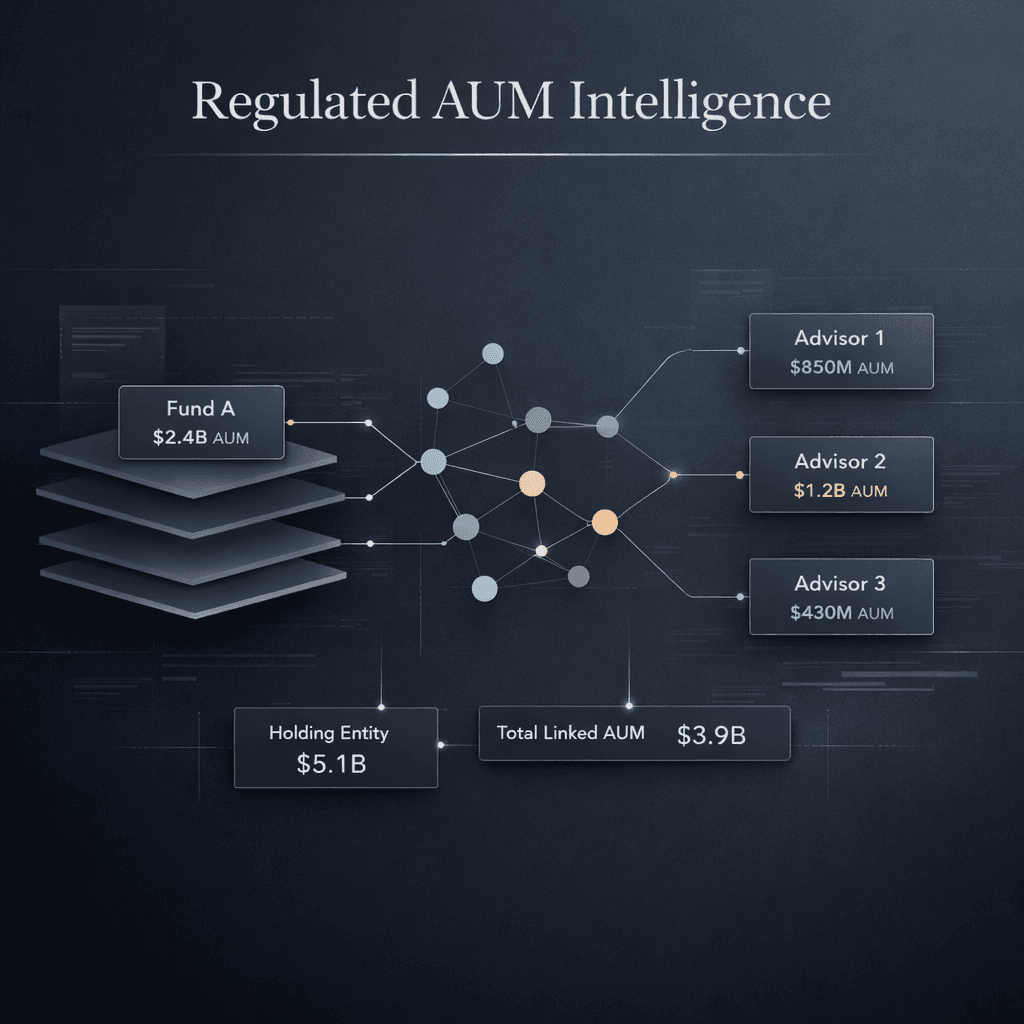
- Regulated AUM intelligence with fund ownership chains and per-adviser AUM from institutional filings
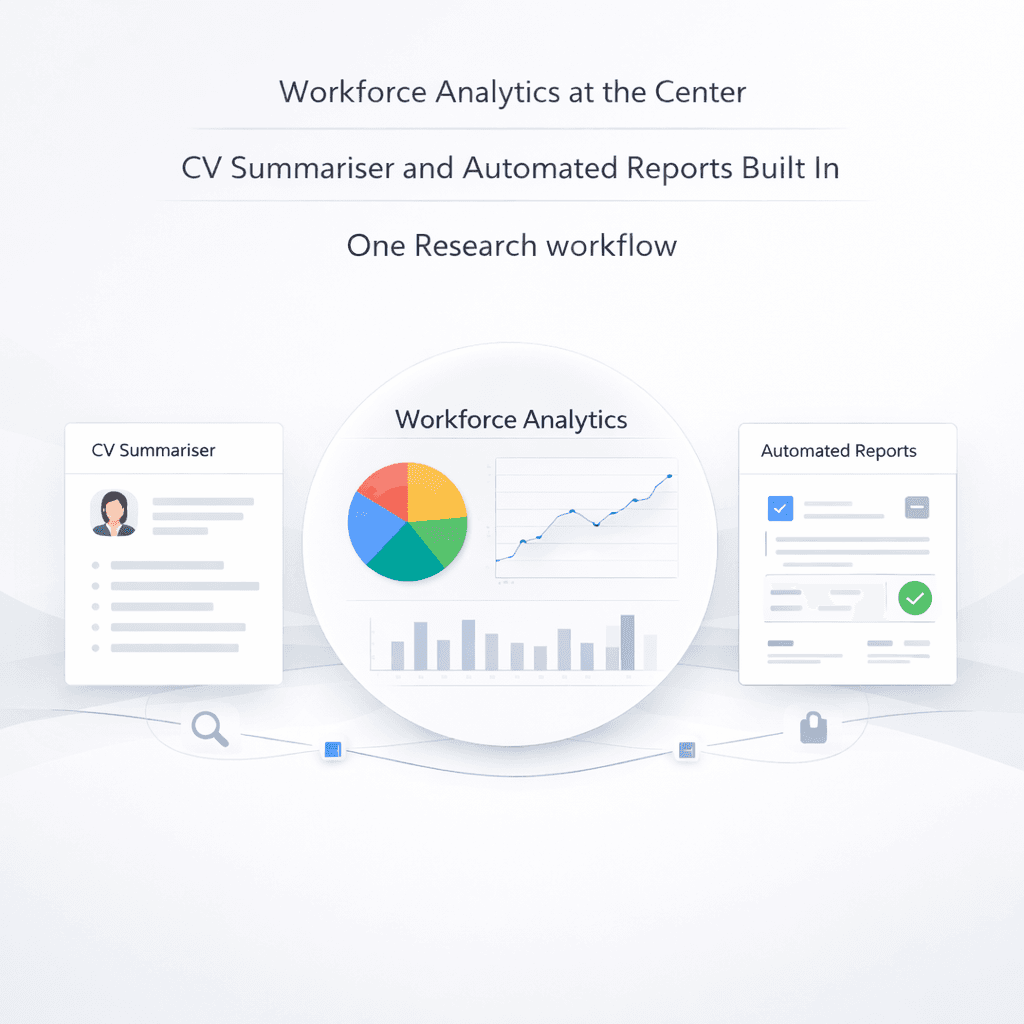
- Candidate tools including CV Maker, Career Coach, JD Matcher, Cover Letter and Scorecards
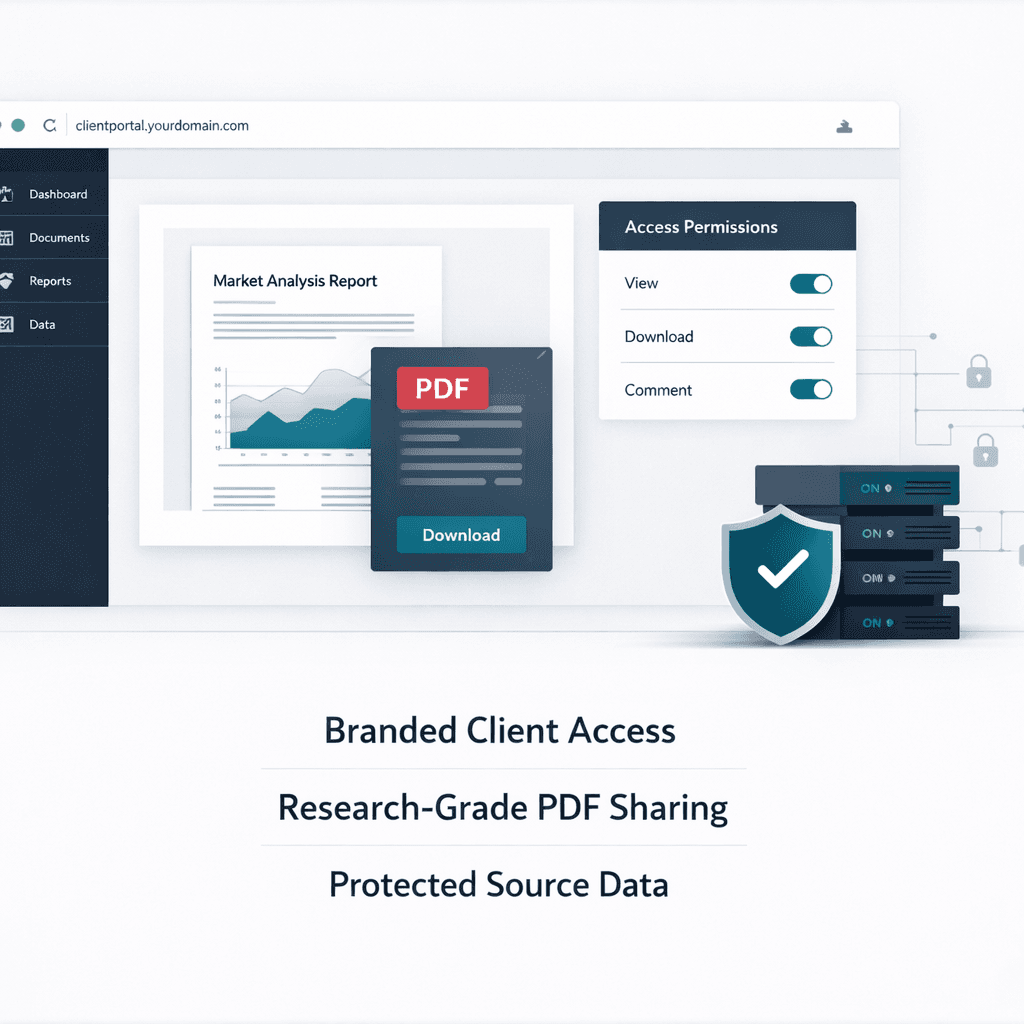
- Branded client portal with token-based access and PDF reporting by client
- Single-seat monthly access rather than a three-seat annual minimum
Where Chikara Intelligence is stronger
Compensation attached to the move
Dealroom does not publish executive compensation, which makes sense given its market. Chikara Intelligence ties salary, bonus and equity to each leadership move using filings and official announcements. That is the number a search client usually wants.
AUM at adviser level
In asset management search, clients usually care about how much the individual runs, not just the size of the fund. Chikara Intelligence resolves adviser-level AUM from regulatory filings and follows the ownership chain. Dealroom's data answers a different question.
Candidate tools in the same workflow
CV Maker, JD Matcher, Career Coach, Cover Letters and Scorecards sit alongside the research. You can go from longlist to candidate output without jumping between tools.
Client delivery built for search firms
Dealroom's portal makes sense for ecosystem mapping. Chikara Intelligence's portal is built for search work: branded client access, selective report sharing and research PDFs ready to send.
Move data, not just headcount
Headcount tells you whether a firm grew or shrank. Move data tells you which roles changed, how quickly they turned over and what the compensation looked like. That is much more useful when a client wants to understand a talent market.
Feature comparison
Chikara Intelligence and Dealroom, side by side.
| Feature |  | Dealroom |
|---|---|---|
| Data Coverage | ||
Executive move tracking Chikara Intelligence tracks role changes within companies. Dealroom focuses on new company creation. | Hire, appointment, promotion, departure and retirement, with compensation attached to each event | Founder alerts for new company formations only |
Compensation data (salary, bonus, equity) | ||
Regulated AUM / investment adviser data | ||
Funding / capital event data | ||
Hiring / attrition trend views | Headcount data per company; no dedicated trend workflow | |
| Search & Alerts | ||
Leadership change alerts | Event-level alerts on any saved search | Funding alerts, watchlists and sector alerts |
Compensation trend views | Industry compensation statistics from verified move events | |
| Search Firm Workflow | ||
Candidate toolbox (CV Maker, Career Coach, JD Matcher) | ||
White-label client delivery portal Dealroom's ecosystem portal is not the same as search firm client delivery. | ||
LaTeX PDF reports Dealroom exports PDF and Excel. Chikara Intelligence produces co-branded reports in-platform. | ||
| Access & Developer | ||
API access Chikara Intelligence API is bundled with enterprise plans. Dealroom sells API access separately. | ||
Minimum seat commitment | 1 seat | 3 seats minimum |
See it on a real search brief
If you need compensation by move, adviser-level AUM and client delivery built for search, we can walk through it live.